Shop by Wood
No two boards are alike — and we never stain. Find the wood that speaks to you, then pick your box.

Our Wood and the Environment
Just like people, snowflakes and stars, no two trees are exactly alike. This is what makes every single Mikutowski Woodworking jewelry box, keepsake piece and desk item unique! Wood is intrinsically warm and unique — variations in wood color and grain will naturally occur.
We embrace this to the fullest and never stain the wood. Only a water-based, eco-friendly coat is applied to bring out the wood’s natural beauty and protect it.
All of the wood we purchase is sustainably sourced. Small pieces of “scrap” are used in detail work and smaller items — any remaining wood is donated to area schools, other artisans, and elderly care programs.

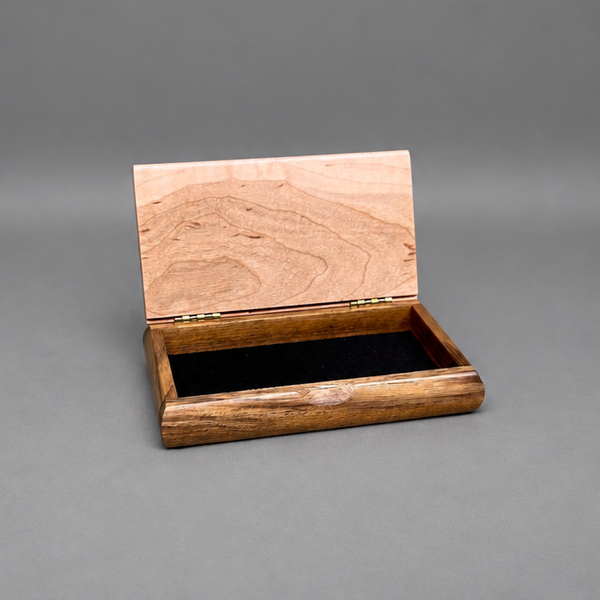
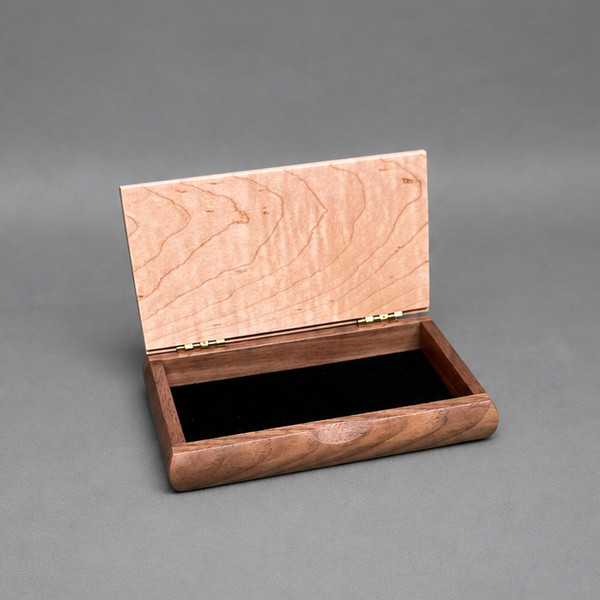
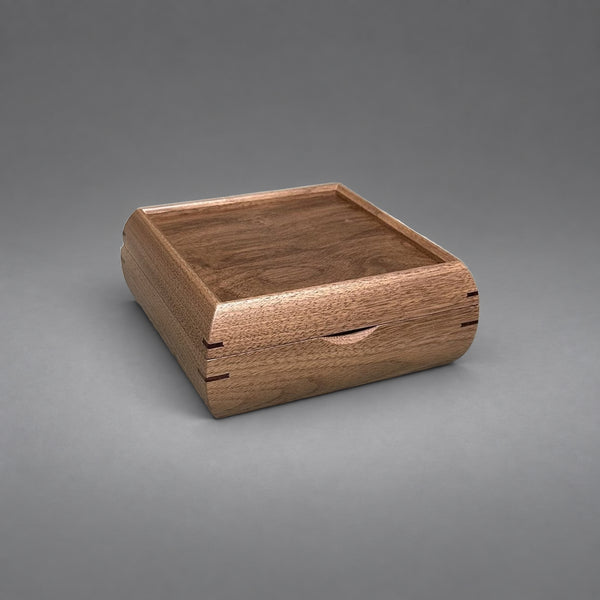
Walnut
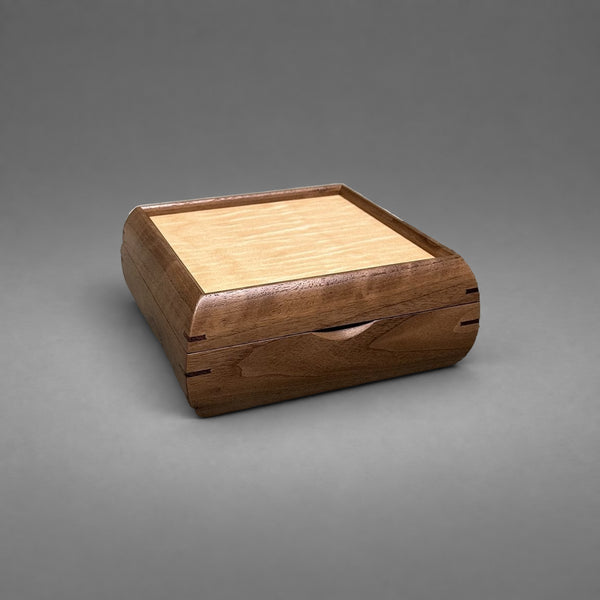
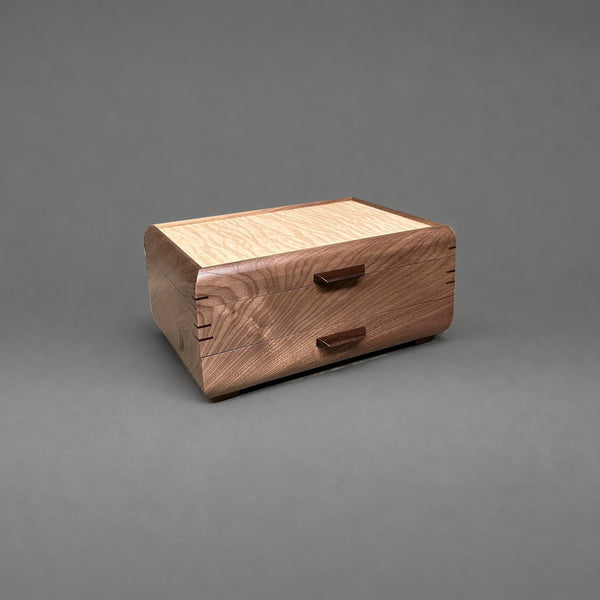
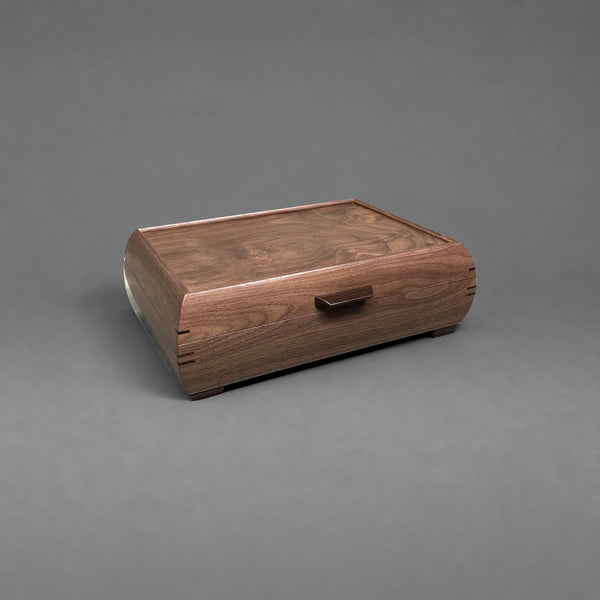
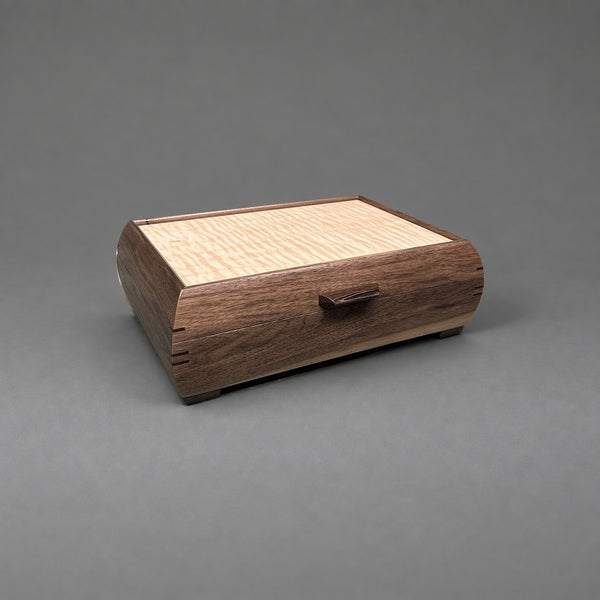
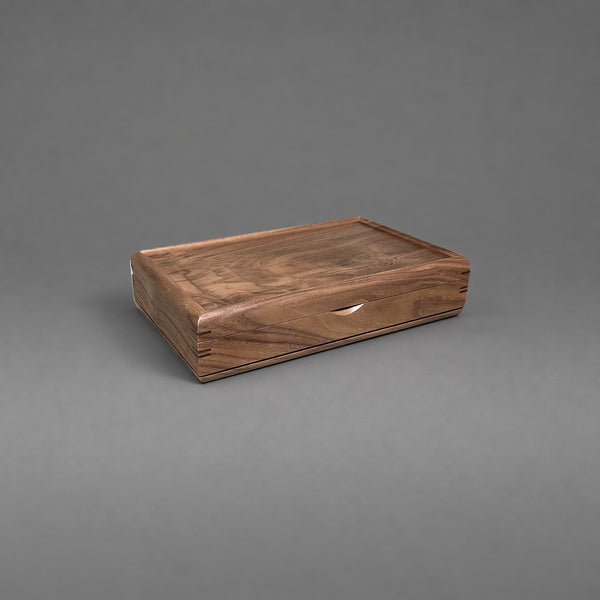
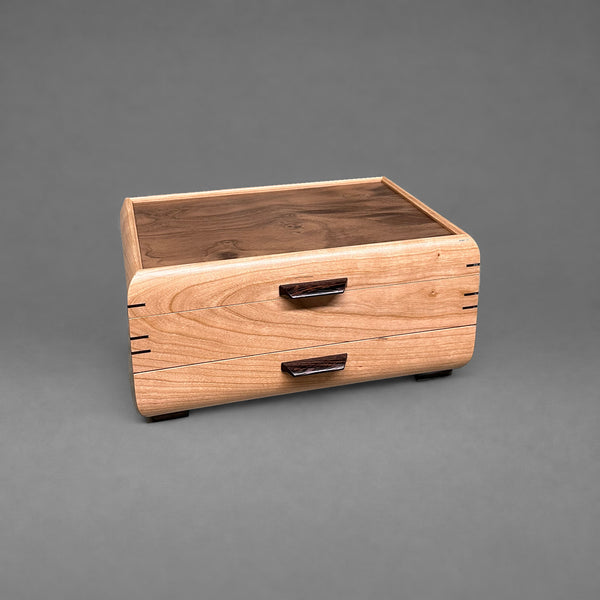
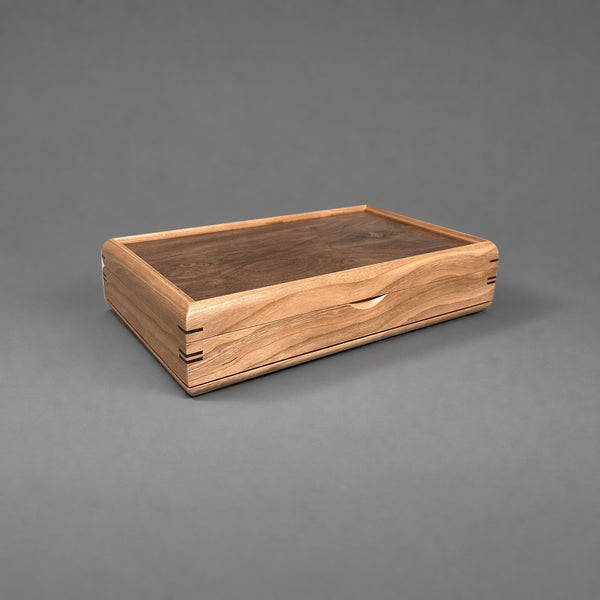
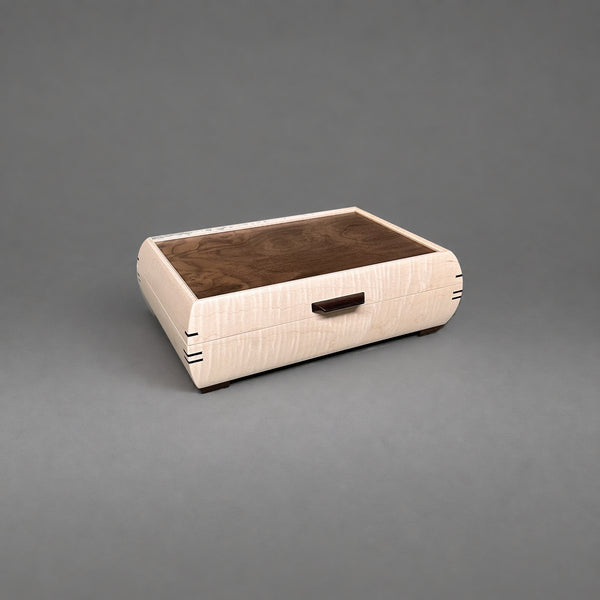
Walnut is always a hot discussion at our shop — is it brown or gray? While it is a brown wood, it is a cool brown, making it appear gray next to the other warm tones in the shop. Walnut is often stained to a warmer red-brown — of course we leave it in its natural state, unstained and clear coated. This domestic hardwood is found in our region and is in fact the only native dark wood in North America.
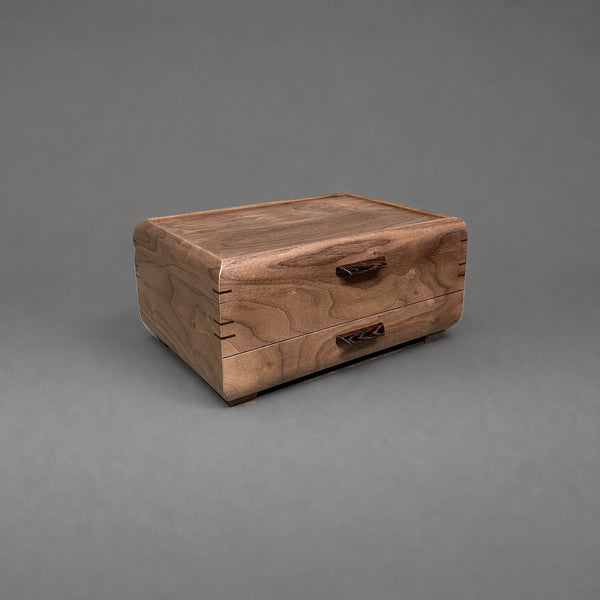

Cherry
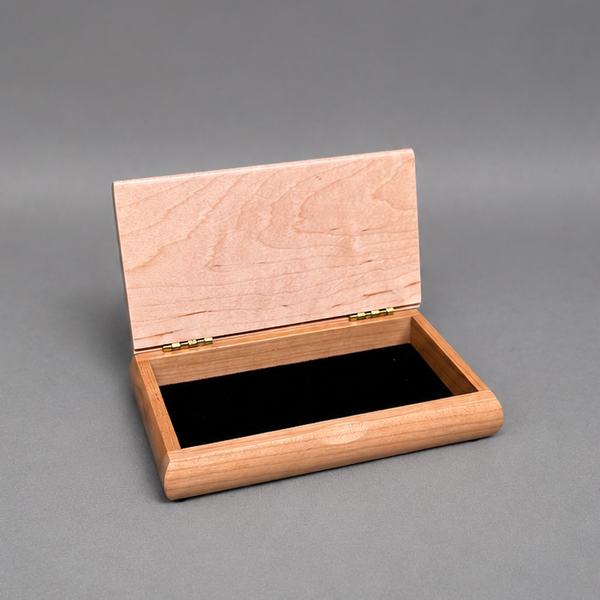
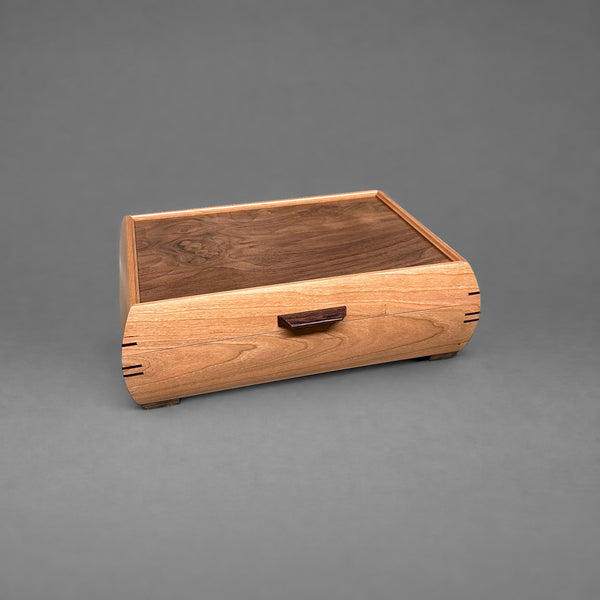
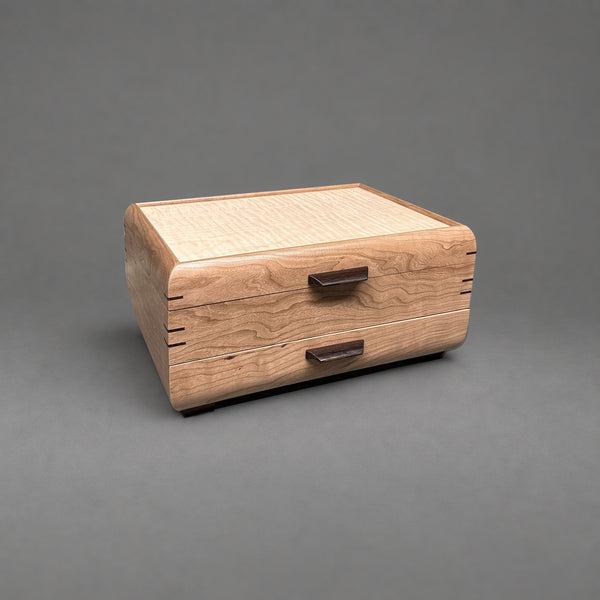
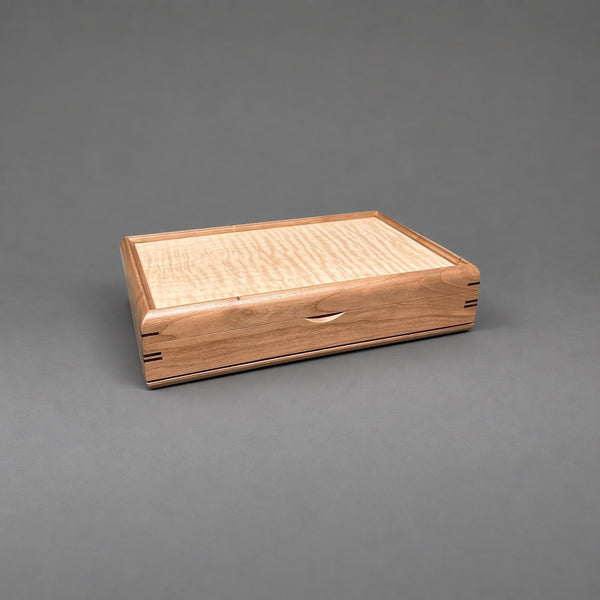
One of the most popular domestic species used by American woodworkers, Cherry is described as having the ideal balance of workability and strength. While people are often used to Cherry being a dark reddish brown, the Cherry we use is left in its wonderfully natural state — remember, we don’t stain our boxes.

Curly Maple
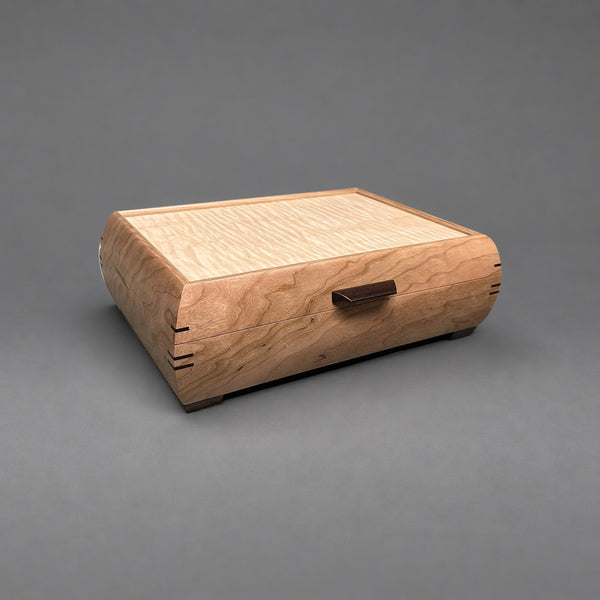
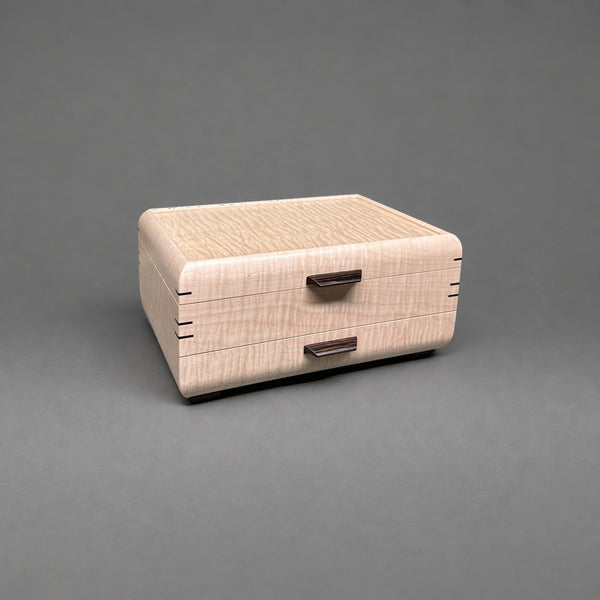
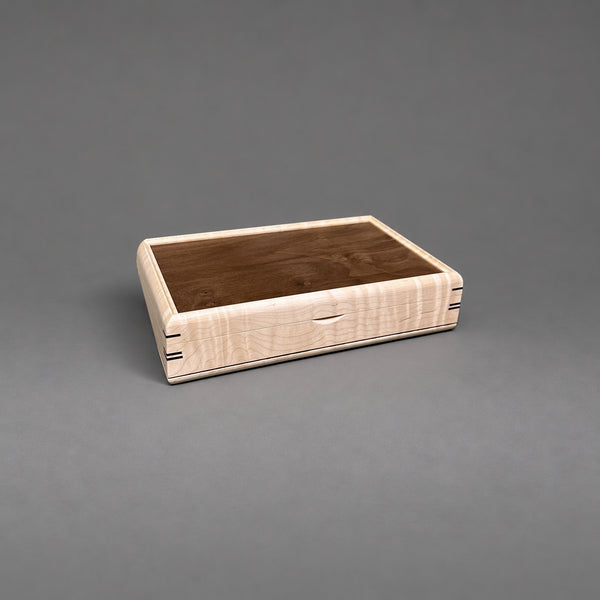
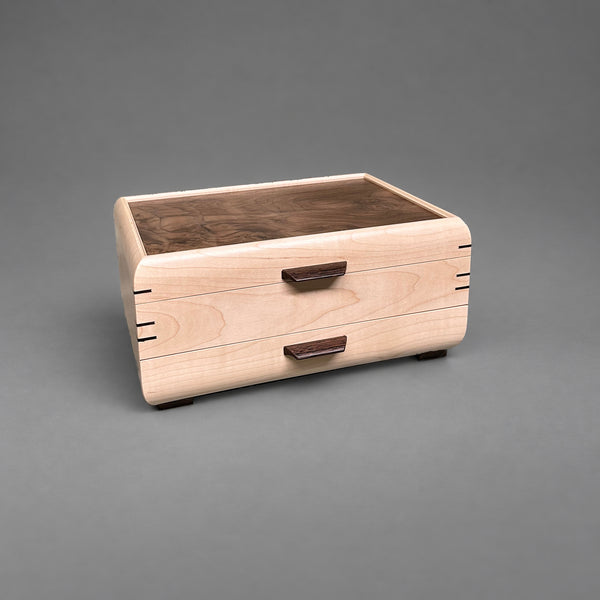
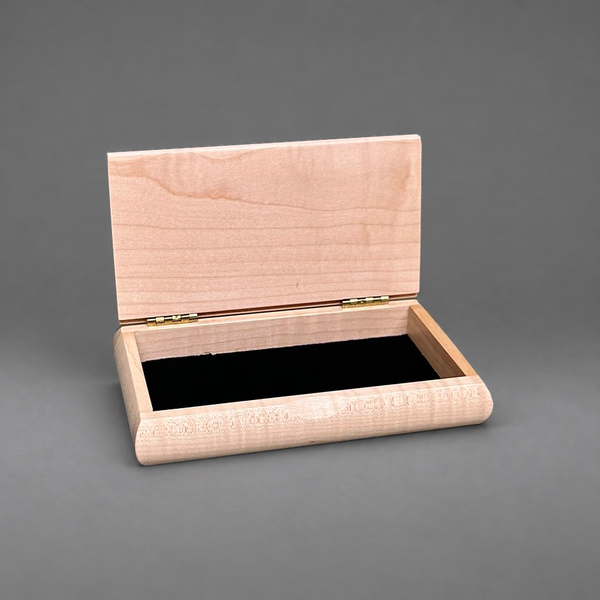
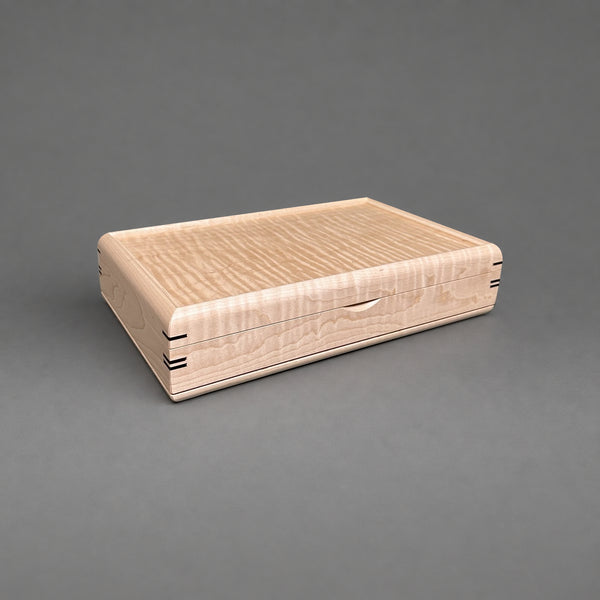
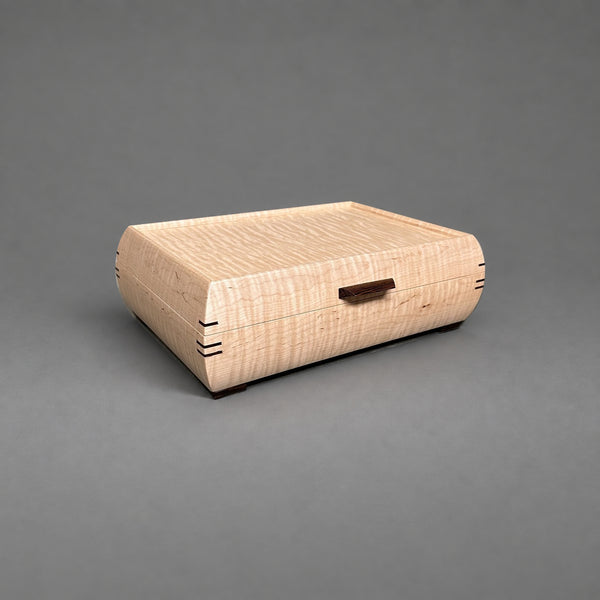
Curly maple is not a species of tree but rather describes the figure found within a maple tree. This domestic hardwood is also called “Tiger maple”, as the figure resembles tiger stripes — lusted after for its 3-dimensional look and variations in color. While typically almost white, our favorite pieces have gray, unique streaks running through them.

Bubinga
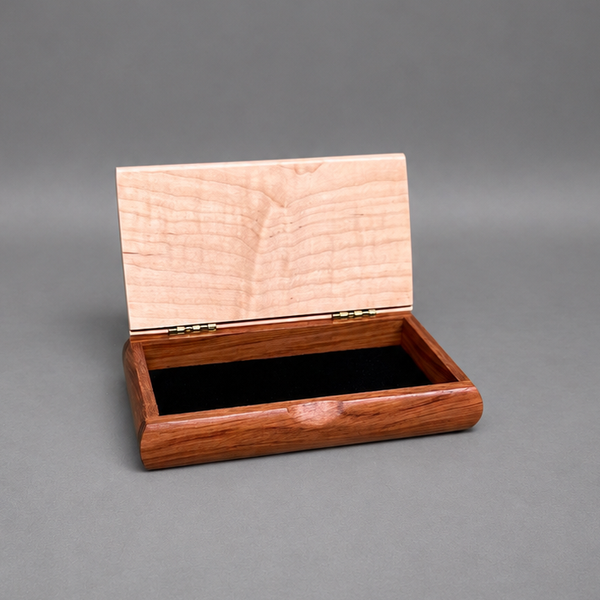
If its quirky name doesn’t get you, its unique characteristics will. Known for strength and beauty, Bubinga is one of the most popular exotic hardwoods we sell — luxury car makers even use this opulent wood as interior trim in their high-end models. The heartwood ranges from pinkish red to dark reddish brown with black streaks, making every piece truly one of a kind.

Canarywood
Canarywood is one of the most fun exotic species we work with at the shop! It has an amazingly recognizable sweet scent. Its unique color and grain — from pale yellow-orange to a darker reddish brown with darker brown or red streaks throughout — seem to magically emerge as each board is worked. Each board truly is unique!
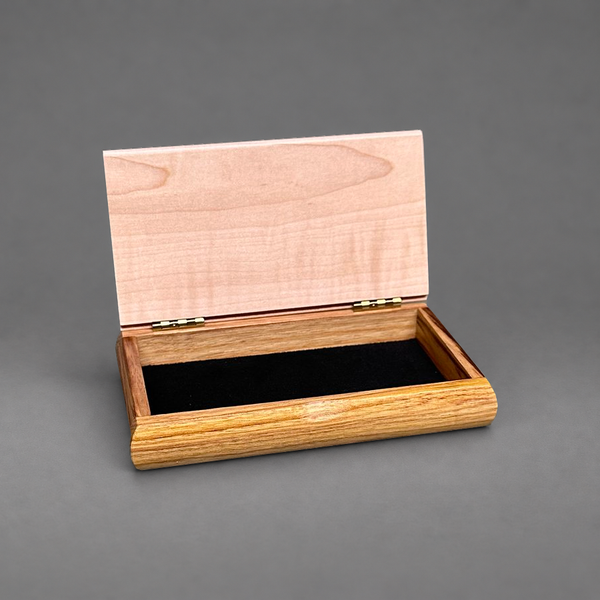

Padauk
Another wood known for its sweet aroma and distinctive color, Padauk offers a striking contrast to most wood species — its vivid orange color is a statement. Be careful with exposing this wood to UV light, as over time that striking color deepens toward a dark brown.
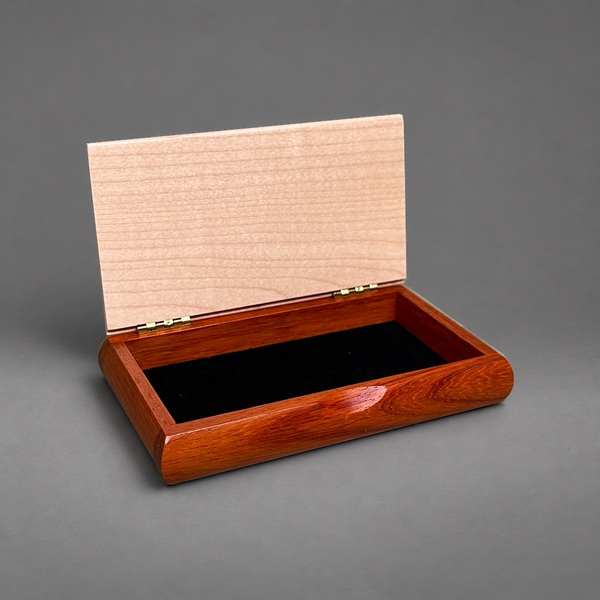

Purpleheart
No, this is not stained. Yes, this wood is really purple! Not for the wallflowers — Purpleheart makes a bold statement. Very dense, hard and difficult to work with, it demands a delicate touch from our woodworkers, and only a limited number of boxes are made in Purpleheart each year, so make sure you get yours while you can.
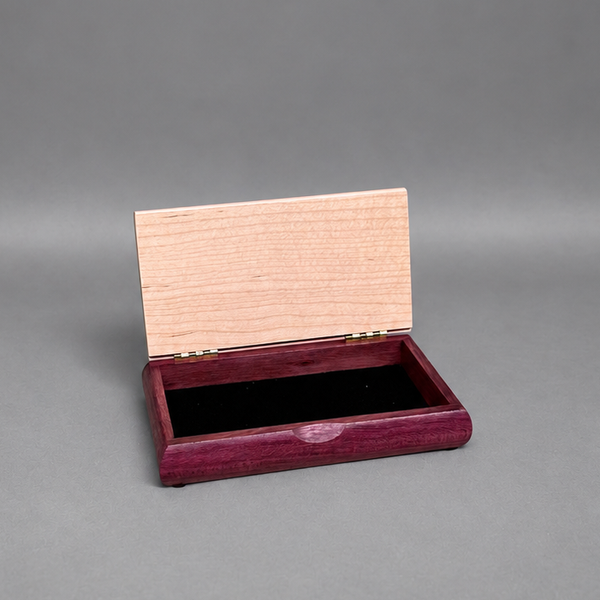

Shedua
You can always tell when you’re working with Shedua — it has the aroma you’d find in a horse barn! Despite its “bouquet”, we are drawn in by the greenish brown coloring and natural luster. And once finished, the smell dissipates.